In the UK, many people still assume the first port of call for any health issue should be their GP. But thousands of everyday health problems don’t require a GP appointment at all. In fact, pharmacists are trained to assess and advise on a large range of minor ailments, and in some cases can supply treatments without a prescription, complete safety checks, or signpost patients who do need medical escalation.
Understanding when to speak to a pharmacist instead of a GP can save time, reduce stress, and help the NHS focus appointments on people who truly need clinical assessment. This guide explains what pharmacists can help with, how consultations work in practice, common examples, and when a GP or A&E genuinely is the right place.
Why Pharmacists Are Often the Best First Step
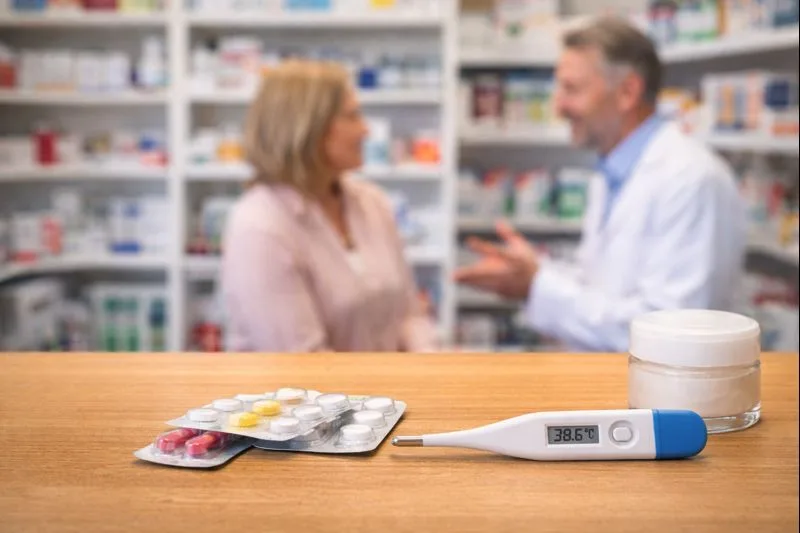
Pharmacists are highly trained clinicians. Most modern community pharmacies provide private consultation rooms and offer NHS and private clinical services. Many operate extended evening or weekend hours — something GP surgeries often cannot match.
The biggest misconception is that pharmacies are only for dispensing prescriptions. In reality, pharmacists routinely help people manage skin problems, pain, minor infections, allergies, digestive complaints, sexual health queries, and seasonal viruses. They also know when something that looks “minor” actually needs urgent medical attention.
If you aren’t sure where to start, you can search by location:
Pharmacies in the UK (https://allhealthandcare.co.uk/pharmacies)
What Counts as a ‘Minor Ailment’?
Minor ailments are health issues that are uncomfortable, irritating, or mildly painful, but not dangerous or life-threatening. They typically involve symptoms that are self-limiting (meaning they improve over time) or treatable with over-the-counter medicines, advice, or short-term self-care.
Examples include everyday problems like colds, hay fever, mild eczema, head lice, mouth ulcers, indigestion, and mild thrush. They are the type of issues people often take to a GP out of habit, rather than necessity.
The NHS promotes the idea that pharmacies should be the first choice for these problems, both to improve access and to relieve pressure on GP and urgent care services. The NHS also provides guidance through the A–Z health check pages online (https://www.nhs.uk/conditions/).
Real Examples: Common Situations a Pharmacist Can Handle
Consider Laura, 29, who develops itchy, red, watery eyes every spring. In previous years, she has booked GP appointments and waited for prescriptions. But her symptoms are classic hay fever. A pharmacist can explain different antihistamines, steroid nasal sprays, eye drops, and how long each takes to work. They may also suggest when to escalate if symptoms worsen or become year-round.
Or think of David, 41, who wakes up with acid reflux after a heavy meal. Instead of booking a GP appointment, he can speak to a pharmacist about proton pump inhibitors, antacids, and lifestyle triggers. Most reflux episodes settle within days and never require a doctor.
Parents find pharmacists especially useful. Sophie’s 7-year-old son comes home scratching his head after school. Head lice treatments don’t require a GP prescription, and pharmacists can explain how to use them properly, how to avoid reinfection, and how long to keep treating before school can confirm clearance.
In another example, Aisha, 23, develops mild vaginal thrush after a long course of antibiotics. A pharmacy consultation is discreet and practical. Thrush is common, easily treated with antifungal creams or pessaries, and rarely requires GP involvement unless it is recurrent or atypical.
The point of these examples isn’t that GPs are unnecessary — it’s that pharmacists provide a faster, simpler route for conditions that resolve without formal medical interventions.
Pain, Fever & Viral Illnesses
Coughs, sore throats, headaches, mild fevers, sinus pressure and cold symptoms are some of the most common minor ailments. Pharmacists can explain which painkillers are appropriate, how to dose safely, how long symptoms typically last, and when escalation is warranted.
In the case of viral infections, antibiotics do not help, and pharmacists are usually quicker than GP surgeries at explaining that distinction. They also know when prolonged symptoms suggest bacterial infection or complications needing a doctor.
Skin, Rashes & Dermatitis
Mild eczema, contact dermatitis and insect bites are everyday pharmacy territory. Many people go to a GP for steroid creams or antihistamines when pharmacy advice would solve the issue in minutes. A pharmacist may ask when the rash began, whether it itches, whether it spreads, and what makes it worse. They can suggest moisturisers, steroid creams or antihistamines depending on the presentation.
They will also escalate quickly if symptoms indicate shingles, cellulitis, meningitis, or allergic reactions — all of which require urgent medical care.
Digestive Discomfort, Indigestion & Bloating
Indigestion is a prime example of a condition better suited to pharmacy than GP in the early stages. Pharmacists understand the difference between transient reflux and “red flag” symptoms like difficulty swallowing, unexplained weight loss, or persistent vomiting. These red flags trigger GP or urgent referral, whereas simple reflux can often be resolved with OTC treatments and lifestyle advice.
Allergies & Hay Fever
Hay fever is one of the clearest cases where pharmacy beats GP for most people. Pharmacists can advise on non-drowsy antihistamines for daytime use, steroid nasal sprays to reduce inflammation, or antihistamine eye drops for severe eye symptoms. They also know how long each takes to work — steroid sprays can take days, antihistamines can work in hours.
The NHS has detailed allergy guidance for self-care, escalation and long-term management (https://www.nhs.uk/conditions/hay-fever/).
Men’s & Women’s Health
Pharmacies offer discreet advice on common conditions like thrush, cystitis (mild uncomplicated cases), period pain, or erectile dysfunction. Increasingly, private pharmacy services can also supply prescription-only medicines after structured clinical checks — a trend that reflects wider NHS pressures and demand for faster access.
Again, escalation rules are clear: for example, pharmacists will refer women with recurrent urinary symptoms to a GP to rule out infection or other causes, and ED enquiries involving cardiovascular risk will be signposted appropriately.
Sexual Health & Emergency Contraception
Pharmacies are central to modern UK sexual health services. Emergency contraception is widely available and does not require a GP. Pharmacists assess timing, safety, and method suitability. Younger women often find the experience less intimidating than traditional clinic routes.
Sexually transmitted infection (STI) testing is increasingly handled online or via clinics rather than pharmacies, but pharmacists remain a key access point for discretion, advice, and safe signposting.
Minor Ailments With High Parental Demand
Parents regularly seek advice for fevers, colds, teething pain, mild eczema, and tummy bugs. Pharmacists can help with appropriate painkillers, rehydration solutions, and symptom duration expectations — something anxious parents rarely get from rushed GP slots.
Escalation triggers like dehydration, prolonged fever or rashes are well-defined and pharmacists are trained to spot them.
When Pharmacists Will Refer You to a GP
Pharmacists will not hesitate to send you to a GP if something doesn’t fit the “minor” category. Sudden worsening, prolonged duration, unexplained symptoms, severe pain, high fever, recurrent infections or failure of OTC treatment are all reasons to escalate.
One of the advantages of starting at the pharmacy is that referral becomes faster. Instead of waiting two weeks for a routine GP appointment, you get a same-day triage and clear guidance.
When a GP Is Not Enough and A&E Is Appropriate
True emergencies are still A&E or 999 territory. Chest pain, stroke symptoms, difficulty breathing, seizures, severe dehydration, major injuries, or allergic reactions need urgent medical attention. Pharmacists are trained to recognise these too and will advise emergency escalation immediately.
Why This Matters for the NHS
Millions of GP appointments every year are taken up by conditions that pharmacies can handle faster and more efficiently. With GP shortages and rising demand, shifting minor ailments to pharmacists is one of the few realistic ways to preserve appointment access for chronic disease management, elderly care, and complex multi-morbid cases.
It also empowers patients. Once you learn which problems are safe to take to a pharmacist, navigating health becomes less intimidating and more rational.